
Skogforsk study: Thinning from above shows clear potential for timber value and forest health
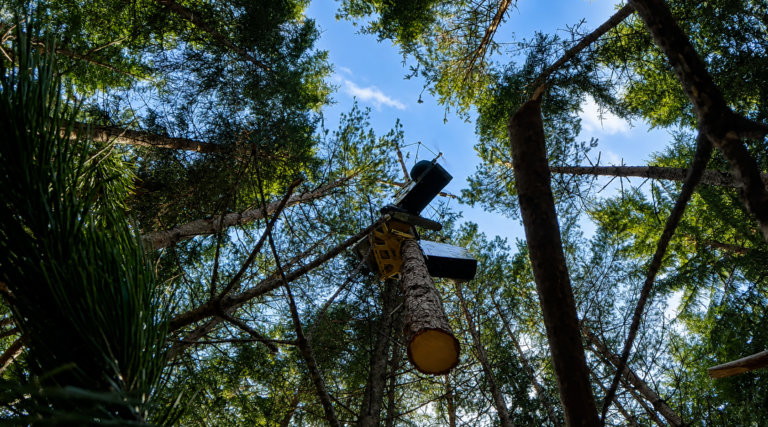
An independent analysis by Skogforsk, the Forestry Research Institute of Sweden, finds that drone-based thinning can raise timber production, reduce damage to the forest, and make thinning possible without building extraction roads.
Skogforsk carried out the analysis in a project with Billerud, funded by the Swedish Energy Agency (Energimyndigheten). It compares drone-based thinning with conventional ground-based thinning, where harvesters and forwarders drive through the forest.
Skogforsk’s conclusion is that drone-based thinning has clear potential to improve timber production and reduce damage. It also makes it possible to care for forests without building new roads or driving heavy machinery on sensitive ground.
Key findings from the report
- According to the report, less ground contact can reduce the risk of this damage. Lighter, more frequent thinning can also limit wind and snow damage.
- In Skogforsk’s simulations, drone-based thinning gave 9.5% higher net sawlog production over a full rotation. That equals 4.2% per year when adjusted for rotation length.
- Nordic studies cited in the report link extraction roads to around 8–10% lower volume growth over ten years. Thinning from above needs no extraction roads.
Skogforsk describes the results as promising. It names the next step as showing full-scale results in real stands together with the forest industry. That is what we are working on now. Our autonomous robots for forestry are built for production forests, and we never operate in nature reserves or protected areas.
Read the report here: https://www.skogforsk.se/kunskapsbanken/kunskapsartiklar/2026/dronare-kan-forandra-hur-vi-gallrar-skogen/
We want to thank Lars Fridh, Patrik Ulvdal, and Aron Davidsson, Billerud, and the Swedish Energy Agency for funding the project.