
Our saw and winches pass new endurance tests
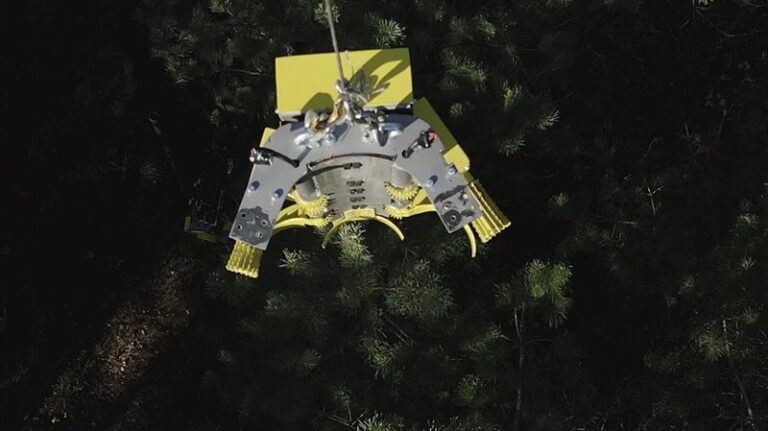
A first flight shows that something is possible. Harvesting one tree after another, all day, is what makes it useful in forestry. Two recent endurance tests show our harvesting system moving in that direction.
Lately, much of our engineering work has gone into something less spectacular than a first flight: endurance. A robot for forestry has to do the same job hundreds of times a day without stopping for repairs. That is what turns a prototype into a working machine.
Our saw has cut 500 trees in a row without stopping. Each cut tests three things working together: the blade, the motor, and the control system. Cutting trees back to back over a long run shows that the system can handle steady work, not just a single good cut.
Delimbing means removing the branches from the stem. Our winches do the heavy lifting in this process, so they have to take the same load over and over without wearing out. In lab testing they have now completed the equivalent of 1,000 delimbing cycles.
Commercial thinning means removing some trees so the remaining ones grow stronger, and it is repetitive work. For autonomous robots to do it at scale, every component has to perform as well on the thousandth tree as on the first. These results bring us closer to that goal: precision forestry from above, with no heavy machinery driving over the forest floor, working at full industrial scale.
We are very proud of our team and what we’re building.